






Supplier Compliance in the Supply Chain: How to Build Resilient, Audit-Ready Evidence
In modern supply chain management, companies often assume they are well prepared: certificates are collected, audits are completed, and documents are stored. On paper, everything looks covered. In practice, this sense of security can collapse quickly during audits, incidents, or unexpected regulatory changes.
Across global supply chains, documentation plays a critical role in business operations. Yet resilience is not about whether documents exist, it is about whether they actually support decisions in supply chain operations when pressure is high. This is especially true as cybersecurity threats, compliance risks, and geopolitical volatility continue to reshape the supply chain landscape.
To support supply chain resilience, evidence must be usable, verifiable, and embedded into daily processes. Otherwise, it remains passive paperwork.
Why Resilient Evidence Is Critical for Regulatory Compliance and Risk Management
Trust documents such as laboratory reports, certificates, or audit reports form the basis for many supply-chain decisions.
A small selection of decisions companies make based on trust documents:
- Onboarding supplier relationships
- Granting, maintaining, or revoking access
- Approving updates or go-lives
- Granting time-limited exceptions
- And much more
In effective supply chain risk management, these decisions cannot rely on documents that are outdated, unclear, or disconnected from workflows. Evidence must actively support risk mitigation, not slow it down.
A common weakness in supplier compliance programs is that documents are collected but not operationalized. Procurement teams request certificates, store them centrally, and move on without defining when documents must be reviewed, which decisions depend on them, or how risks are escalated when requirements are no longer met.
This creates blind spots that weaken supply chain performance and increase exposure to supply chain disruptions.
Three Core Questions for Cyber-Resilient Evidence and Supplier Compliance
Resilient trust documents are verifiable, up to date, and traceable enough to reliably support approvals, access decisions, and exceptions and to withstand audits or incidents without rework.
1. Integrity: Is the content complete and unchanged?
Integrity means the document exists exactly as issued: no missing attachments, no silent edits, no “adjusted” versions.
Typical failure points in manual handling:
- PDFs are emailed and saved locally multiple times
- Files are stored without version control or clear write permissions
- Content is manually copied into spreadsheets, losing details
Practical check: Is this document complete and intact?
- Is there a version-secure repository (version, date, owner)?
- Is it clearly defined who may view, share, or replace documents?
- Can you prove which version was valid at a given point in time?
Tip: The German Federal Office for Information Security (BSI) provides practical materials on secure supply chains that support these checks.
2. Authenticity: Can you verify the source and issuance?
Authenticity means you can prove the document truly comes from the stated issuer and belongs to the stated organization.
Typical signs of manipulation:
- Unclear issuer (logo in a PDF, but no verifiable reference)
- Certificates without a clear link to the legal entity (e.g., AG, GmbH)
- Audit reports lacking context: who audited, under which standard, and with what scope?
Practical check: Is this document authentic?
- Is there a verifiable reference (certificate ID, registry, audit provider)?
- Is the organization clearly identified (name, address, legal entity) and aligned with the contractual partner?
- Is the scope clearly defined (sites, services, systems)?
The EU Agency for Cybersecurity (ENISA) explicitly warns that supply-chain security fails in practice when requirements, evidence, and responsibilities are not consistently aligned and verifiable.
3. Traceability: Can you explain lifecycle and decisions over time?
Traceability means you can later reconstruct which evidence applied when, what changed, and which decision was based on it.
Typical problems:
- During recertification: does the new version still cover the old scope?
- For exceptions: are deadlines and closure tracking implemented?
- For approvals: were they granted “quickly via email” and later become untraceable?
Practical check: Is this document traceable?
- Is there a clear internal owner and a supplier contact?
- Are expiry dates, review cycles, and recertification plans defined?
- Can you prove which decision (access, go-live, exception) was based on which evidence state?
Checks should be scaled by criticality. The more critical the trust document, the stricter the controls. A widely used methodological framework for this risk-based approach is ISO/IEC 27005, which structures risk identification, assessment, and treatment.


Evidence Packages: Using Documentation to Mitigate Supply Chain Risks
An evidence package brings structure to complexity. Instead of scattered documents, it provides a decision-ready view of compliance, security, and operational risk for a supplier, product, or service.
For supply chain operations, this approach improves clarity and helps strengthen supplier relationships by setting clear expectations.
An effective evidence package supports supply chain risk management by answering key operational questions across the entire supply chain.
Eight Questions Every Evidence Package Must Answer for Regulatory Compliance
1. What is the scope according to the trust documents?
- Which services, systems, and data classes are covered?
- How are they used?
2. What access models exist into the internal network?
- Which accounts and permissions exist?
- What remote or emergency access paths are in place?
3. Are there cshanges and updates?
- How do changes reach production?
- Who approves updates?
- How are changes documented?
4. What is the security baseline?
- Which baseline evidence exists (e.g., ISO 27001, audit summary)?
- For which scope does it apply?
5. How are vulnerability and patches handled?
- Which SLAs apply?
- How does disclosure work?
- How are patches handled?
6. How is incident response organized?
- Who is reachable 24/7?
- Which minimum information is provided?
- What is the escalation path?
7. Lifecycle
- Which expiry dates and recertifications apply?
- How are versions tracked?
- How are scope changes documented?
8. Exceptions
- Which exceptions exist and who owns them?
- What deadlines apply?
- How is closure tracked?
Three Warning Signs of Weak Evidence in Supplier Compliance and Cyber Resilience
Not every trust document or evidence package answers these questions. Three typical failure patterns emerge:
- Scope fog
The document exists, but it’s unclear whether it covers the specific service, site, or process. - Time gap
Expiry dates, versions, or recertifications exist, but no follow-up actions, deadlines, or responsibilities are defined. - Broken chain
The document exists but is not linked to approvals, access decisions, or exceptions.
In all three cases, the document and the entire evidence package, lacks the quality needed to trigger or justify operational decisions reliably.
How Kevla TrustDocS Strengthens Compliance Management and Cyber Resilience
Teams often struggle with the secure exchange and effective use of compliance evidence due to document overload, too many versions, stakeholders, and unclear responsibilities. This complexity hampers supply chain processes and increases compliance risks, making it difficult to verify document validity and traceability across supply chain partners.
Kevla TrustDocS offers a secure, automated platform designed to streamline the management of trust documents within supply chain operations. By providing role-based access control, traceable versioning, and automated validity checks, it helps organizations maintain audit-ready evidence that supports regulatory requirements and mitigates risks effectively. This solution ensures that critical documents underpinning approvals, exceptions, and remediation efforts are always current, reliable, and seamlessly integrated into daily workflows, strengthening supplier relationships and overall supply chain resilience.
Deep Dive: Cybersecurity Threats and Risk Management in the Supply Chain: Our cybersecurity whitepaper
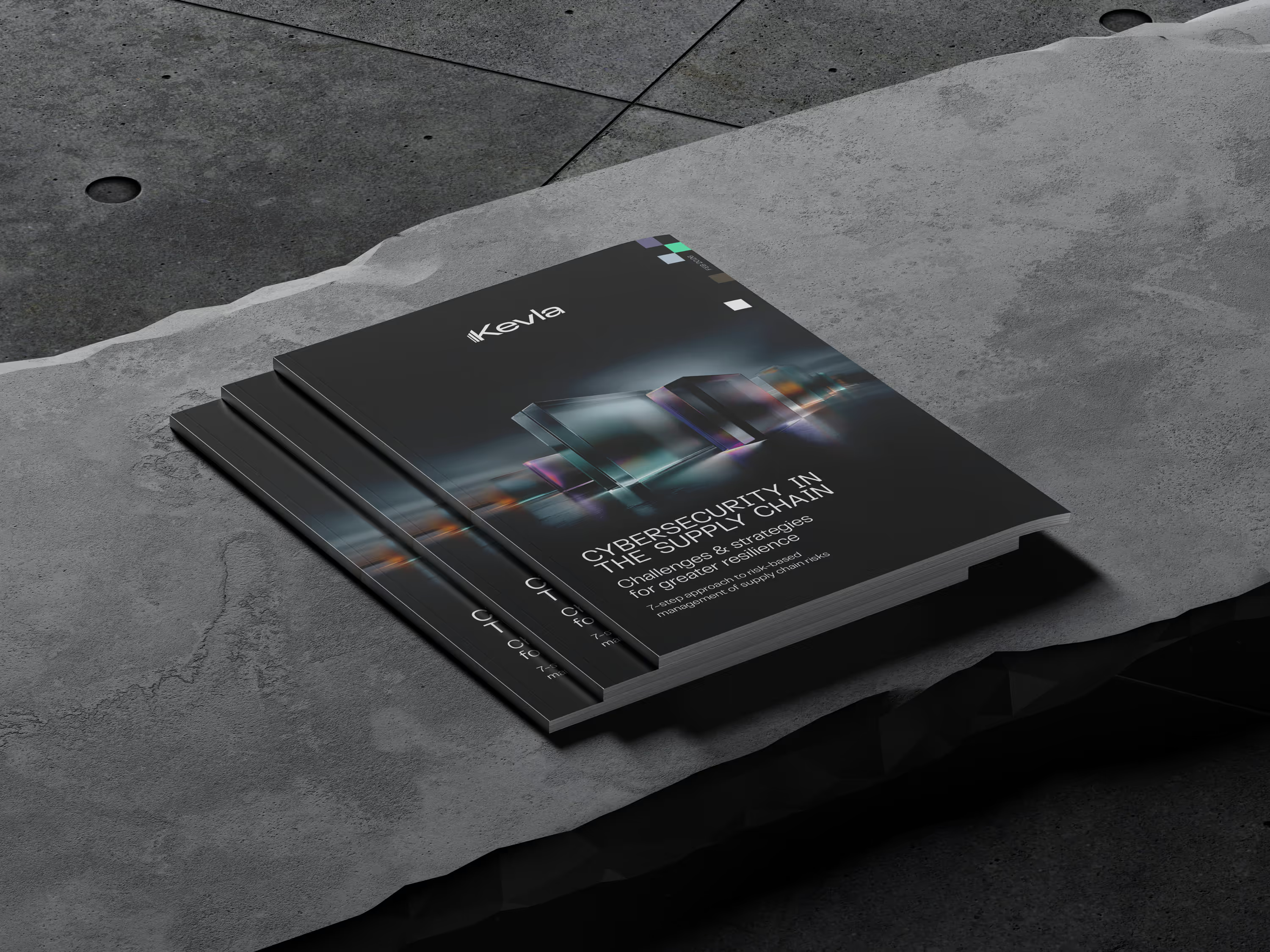
If you want to dive deeper or implement an end-to-end control model, our whitepaper “Cybersecurity in the Supply Chain: Challenges & Strategies for Greater Resilience” (February 2026) explores prioritization, tiering, monitoring, and practical implementation.
Download the free guide now
Get the free guide packed with practical tips and checklists.
From Theory to Practice: A 30-Minute Framework for Resilient Compliance Evidence
- Select three critical suppliers or services
- Build one evidence package per supplier using the eight questions above
- Introduce a traffic-light system: rate each document by integrity, authenticity, and traceability (green / yellow / red)
- Act on yellow or red results by requesting updates, clarifying scope, and setting clear deadlines
- Define review and expiry logic with concrete owners and calendar reminders
Time to optimize your evidence management and exchange documents securely?
If you want to centrally manage supplier evidence packages, track versions cleanly, and actively control expiry dates, we’re happy to advise you.